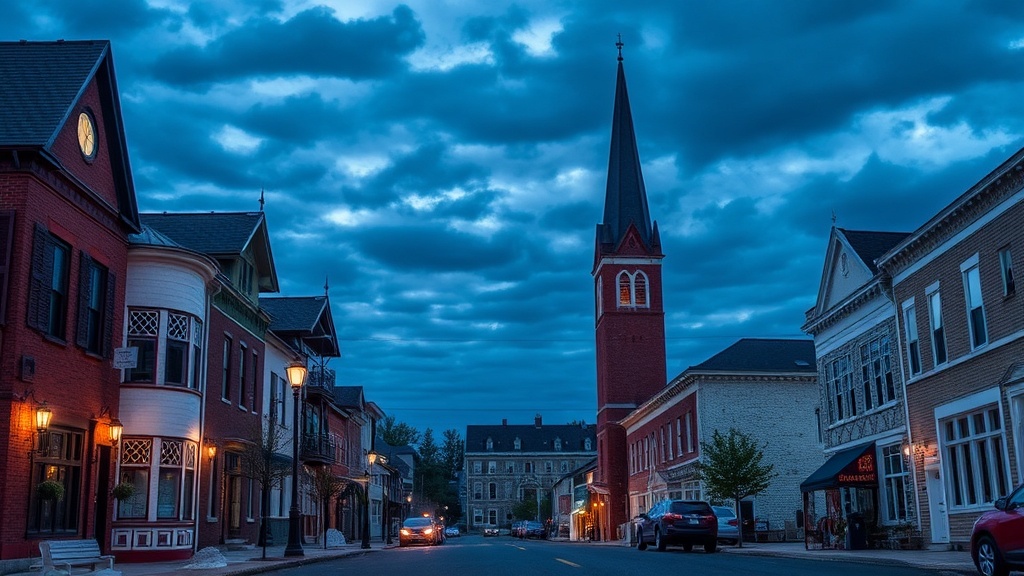
Sainte-Julie: Exploring Hidden Gems in Montérégie

What Makes Sainte-Julie Worth Visiting in Montérégie?
Sainte-Julie sits just 25 kilometers east of Montreal, a quiet suburban community that most tourists zip past on Highway 20 without a second glance. That's a mistake. This post maps out the under-the-radar spots locals actually frequent — family-run bakeries, nature trails that don't appear in guidebooks, and community events that reveal the real character of this corner of Montérégie. Whether you're a day-tripper from the city, a new resident figuring out your neighborhood, or just someone tired of the same-old Montreal weekend circuit, you'll find concrete recommendations here that go beyond the obvious.
Where Can You Find the Best Local Food in Sainte-Julie?
The best local food in Sainte-Julie isn't at chain restaurants along the highway — it's tucked into strip malls, residential side streets, and the Saturday morning market. Here's the thing about eating here: you need to know where to look.
Boulangerie Première Moisson — yes, it's a Quebec chain, but the Sainte-Julie location on Boulevard des Hauteurs has a different energy. The croissants come out of the oven at 6:30 AM, and by 9:00, the almond variety is usually gone. Locals line up for the tarte au sucre (sugar pie) made with maple syrup from a farm in nearby Saint-Bruno-de-Montarville. It's not fancy. It's just good.
For something more substantial, Restaurant La Belle Province on Rue Saint-Denis serves the kind of diner food that Quebec does better than anywhere else. The poutine is hand-cut, the gravy is made in-house, and the clientele is 90% regulars who don't need to look at the menu. A large poutine runs about $10 — half what you'd pay in Montreal for something inferior.
The real hidden gem? Marché Public de Sainte-Julie, held Saturdays from May through October in the parking lot behind the community center. Vendors sell produce from farms within a 50-kilometer radius. The tomatoes taste like tomatoes. The honey comes with the name and phone number of the beekeeper. You'll find Fromagerie Maisonneuve selling aged cheddar that's won awards at the Concours des Grands Cheeses du Monde, and a Mennonite family from Saint-Jacobs selling maple butter that's dangerously addictive.
Local Food Spots at a Glance
| Spot | What to Order | Best Time to Go | Price Range |
|---|---|---|---|
| Boulangerie Première Moisson | Almond croissant, tarte au sucre | Before 9:00 AM | $3–$8 |
| La Belle Province | Large poutine, hot chicken sandwich | Lunch rush (11:30–1:00) | $8–$15 |
| Marché Public | Fresh tomatoes, local honey, aged cheddar | Early Saturday morning | $5–$30 |
| Pâtisserie Mario | Chocolate éclairs, mille-feuille | Afternoon (avoid morning rush) | $4–$12 |
Pâtisserie Mario deserves special mention — it's been family-owned since 1987, and the Mario in question still comes in at 4:00 AM to make the puff pastry. The chocolate éclairs are the size of small submarines. The mille-feuille is constructed with surgical precision. It's not trendy. It's not Instagram-ready. It tastes like childhood if you grew up in Quebec.
What Outdoor Activities Are Available Near Sainte-Julie?
You've got more options than you'd expect for a suburb of 30,000 people — and most visitors never find them. The outdoor scene here is fragmented, unmarketed, and (honestly) better for it.
Parc du Mont-Saint-Bruno is technically in neighboring Saint-Bruno-de-Montarville, but it's so close that Sainte-Julie residents treat it as their backyard. Five lakes, 27 kilometers of hiking trails, and a ski hill that — while small — is perfect for teaching kids without the chaos of Tremblant or Sutton. Entrance to the park is free if you have a SEPAQ annual pass (which, if you live in Quebec, you probably should). The catch? The main parking lot fills by 10:00 AM on summer weekends. Locals know to park at the smaller lot near Lac du Moulin and hike in.
Within Sainte-Julie proper, Parc du Domaine Vert doesn't look like much from the street. Behind the community center, though, you'll find 4 kilometers of trails through forest that feels surprisingly remote. Mountain bikers use it for training. Birdwatchers come for the warblers in spring. In winter, the city grooms the trails for cross-country skiing — free, no pass required, equipment rentals available at the community center for about $15.
The Route Verte — Quebec's provincial bike network — runs right through Sainte-Julie on a converted rail line. It's flat, paved, and stretches 40 kilometers in either direction. Head west and you can cycle to Longueuil in about 90 minutes. Head east and you'll hit Mont-Saint-Hilaire (and its famous apple orchards) in roughly the same time. The path is maintained year-round, which means winter fat biking is an option if you're equipped for it.
For golfers, Club de Golf de Beloeil is ten minutes away — a semi-private course that's consistently ranked among the best in Montérégie. Green fees are around $75 on weekends, which isn't cheap, but the conditioning rivals private clubs charging twice as much. The course has hosted Canadian PGA qualifying events. It's not hidden, exactly, but out-of-towners rarely venture this far from the city for golf when there are courses closer to Montreal.
Are There Any Cultural Events or Local Traditions in Sainte-Julie?
Yes — and they're refreshingly unpolished. Sainte-Julie doesn't have a tourism bureau pushing packaged experiences. What it has is a community that shows up for things because they're local, not because they're marketed.
The Fête Nationale du Québec (June 24th) is the biggest event of the year. The city shuts down Boulevard des Hauteurs for a street party that draws thousands. Live music starts at 6:00 PM — local bands, mostly, playing Quebec folk and rock covers. There's a bonfire at midnight. The crowd is families, teenagers, retirees, all mixed together. It feels like the whole town decided to have a party in their front yard. No tickets, no security theater, just people.
In July, Les Concerts sur l'Herbe brings free outdoor concerts to Parc du Domaine Vert. The lineup leans toward jazz and blues — think local trios and the occasional touring act from Montreal. Bring a blanket, a bottle of wine (technically not allowed, but nobody enforces it if you're discreet), and bug spray. The mosquitoes can be aggressive.
October means La Fête de l'Halloween — a community trick-or-treating event on steroids. The city closes several streets, businesses hand out candy, and there's a costume parade that ends at the community center with hot chocolate and a haunted house. If you have kids under 12, it's non-negotiable. The logistics alone are impressive — hundreds of volunteers, traffic control, the works.
Worth noting: Sainte-Julie has a significant English-speaking minority (about 15% of the population), which is unusual for the South Shore. That means most events are genuinely bilingual, not just French with an English afterthought. You'll hear both languages on stage, see both on signage. It's casual integration, not policy-mandated.
Annual Events Calendar
- January–February: Winter carnival at Parc du Domaine Vert (ice skating, snowshoe races, hot maple taffy on snow)
- June 24: Fête Nationale street party — the big one
- July–August: Concerts sur l'Herbe (four free outdoor concerts)
- September: Harvest festival at the community garden (pumpkins, cider, hayrides)
- October 31: Fête de l'Halloween (community trick-or-treating)
- December: Christmas market at Centre Culturel (local crafts, mulled wine, Santa photos)
Where Should You Stay When Visiting Sainte-Julie?
Here's the honest answer: there aren't many options in Sainte-Julie itself, and that's not necessarily a bad thing. You're 25 minutes from downtown Montreal. Most visitors stay in the city and day-trip out here.
If you want to be local, though, there are a few solid choices. Hôtel L'Oiselière Montmagny is technically in Montmagny (about 30 minutes east), but it's the closest thing to a destination hotel in the region — spa, restaurant, river views. Rates run $120–$180 depending on season.
Closer in, Motel Beloeil is ten minutes from Sainte-Julie and surprisingly decent for the price ($80–$100). Clean, recently renovated, free parking. It's a motel — don't expect luxury — but it's family-run and the owners actually care whether you have a good stay.
Your best bet for a longer stay might be Airbnb. Sainte-Julie has a growing number of hosts renting out basement apartments and in-law suites. Prices are lower than Montreal, parking is free, and you get a residential experience. Look for listings near Boulevard des Hauteurs if you want to be able to walk to restaurants and the market.
What's the Best Way to Get Around Sainte-Julie?
You'll need a car. Full stop. Sainte-Julie has a Réseau de transport métropolitain (RTM) commuter rail station with service to Montreal's Central Station, but that's for commuters, not tourists. The train runs roughly every 30 minutes during rush hour, hourly otherwise, and takes about 35 minutes to reach downtown.
Within Sainte-Julie, public transit exists — there's a local bus network operated by the RTM — but routes are designed for commuters, not visitors. Frequencies are low (every 30–60 minutes), coverage is spotty, and you can't reliably get to most of the places mentioned in this post.
Driving is straightforward. Sainte-Julie is laid out on a grid. Boulevard des Hauteurs is the main commercial artery. Highway 20 runs along the northern edge of town — exits 102 and 106 both work. Parking is free virtually everywhere. The catch? Rush hour traffic on the approach to the Honoré-Mercier Bridge (the main route to Montreal) can be brutal. Leave before 7:00 AM or after 9:30 AM if you're heading into the city.
Cycling is viable for getting around town itself — the streets are wide, traffic is generally respectful, and there are dedicated bike lanes on major roads. Just don't expect to ride to Montreal without using the Route Verte or dealing with some unpleasant highway-adjacent stretches.
Sainte-Julie isn't trying to be a destination. That's precisely why it's worth visiting — if you know what to look for. The food is honest, the outdoor access is real, and the community events haven't been focus-grouped into oblivion. You'll leave with a sense of what suburban Quebec actually looks like when nobody's performing for tourists. Bring a car, bring an appetite, and don't rush. The best discoveries here happen slowly.