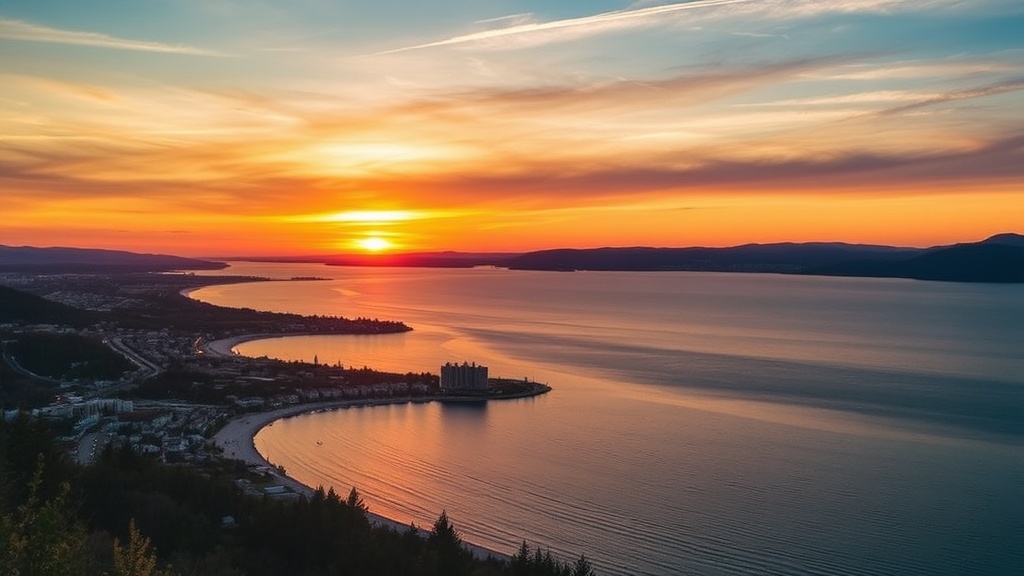
Where to Find the Best Sunset Views in Sainte-Julie

Did you know that the way light scatters through the atmosphere during a sunset is actually dictated by the amount of particulate matter in the air? In the South Shore region, these atmospheric shifts create some of the most striking colors in Quebec. This guide identifies the exact spots in Sainte-Julie where you can catch the best views of the sun dipping below the horizon, ensuring you don't miss the golden hour.
Most people drive right past these locations without a second thought. They're looking for grand vistas or mountain ranges, but in Sainte-Julie, the beauty lies in the open fields, the way the light hits the local architecture, and the stillness of our local waterways. I've spent enough evenings scouting these spots to know which ones actually deliver when the sky turns pink.
Where is the best place to watch the sunset in Sainte-Julie?
The best place to watch the sunset in Sainte-Julie is the open field areas near the local parks and the perimeter of the residential zones facing west. Because our topography is relatively flat, you don't need a mountain to see the light; you just need an unobstructed view of the western horizon. The Parc de la Rivière area offers a particularly stunning backdrop when the light reflects off the water.
If you're a fan of quiet reflection, you might want to check out my previous piece on finding quiet reading nooks in local parks. It's the same vibe—peaceful, unhurried, and perfect for a little late-afternoon downtime before the sun goes down.
Here are my top three specific locations:
- The Parc de la Rivière Perimeter: The water acts like a natural mirror. When the sun hits that specific angle, the reflection makes the whole area feel twice as bright.
- The Residential-Agricultural Borders: The edges where the suburban streets meet the farmland offer wide-open vistas. There's nothing blocking the view, which is exactly what you want.
- The Local Sports Fields: Large, flat expanses of grass provide a clear line of sight to the western horizon. It's a great spot if you're out for a jog or a walk with the dog.
I've noticed that the light looks different depending on the season. In the summer, the heat haze can actually soften the colors, making them look more pastel. In the winter, the crisp, cold air makes the colors look sharper and more intense—though you'll definitely want a good heavy jacket like a Patagonia Down Sweater to stay warm while you watch.
What time should I arrive to see the sunset?
You should aim to arrive at least 30 minutes before the official sunset time listed on your weather app to catch the "golden hour." The real show often starts before the sun actually disappears. If you show up exactly at sunset, you've already missed the best part—the transition from gold to deep violet.
The Environment Canada weather services provide highly accurate sunset times for the Quebec region. I always keep a tab open on my phone to check the exact minute. It's a bit of a science, really. The light changes every few minutes. One moment it's bright orange, and the next, it's a deep, moody crimson.
Don't be the person who arrives late and sees a dark sky. The "blue hour" that follows the sunset is also quite beautiful, but that's a different experience entirely. If you're looking for photography tips, you'll want to be ready for the rapid shifts in light-intensity.
Comparing View Quality by Location
Not all spots are created equal. Depending on what you want to see—water, trees, or just open sky—one spot might be better than another. I've put together a quick breakdown to help you choose your spot based on the mood you're after.
| Location Type | Best For... | Visual Highlight | Crowd Level |
|---|---|---|---|
| Riverfront | Photography | Reflections on water | Low to Medium |
| Open Fields | Relaxation | Wide, unobstructed sky | Very Low |
| Residential Edges | Casual Walks | Golden light on houses | Medium |
How do I prepare for a sunset viewing session?
Prepare by checking the weather for cloud cover and bringing a comfortable way to sit, such as a portable stool or a thick blanket. A clear sky is great, but a few wispy clouds can actually catch the colors and make the sunset look more dramatic. If it's a completely clear, empty sky, the colors might feel a bit "flat."
I can't stress this enough: bring a thermos. Even in the summer, the temperature drops quickly once the sun dips below the horizon. I never go out without my YETI Rambler filled with hot tea or coffee. It makes the experience much more enjoyable when you aren't shivering while staring at a beautiful sky.
If you're planning to take photos, bring a tripod. The light fades so fast that your phone or camera will struggle to capture the detail without some stability. It's a common mistake to try and snap a photo while moving—you'll end up with a blurry mess.
If you're out near the water, remember that the ground can be damp. I've seen plenty of people sit down on a patch of grass that looks dry, only to realize it's a damp meadow. A waterproof outdoor blanket is a smart move. It's one of those small things that makes a huge difference in your actual enjoyment of the evening.
A quick tip for the local photographers: the best light is often found when the sun is just below the horizon. This is when the "afterglow" happens. It's a fleeting moment, but it's when the colors are most intense. If you're looking for something to do while waiting for the light to change, you might enjoy checking out the best picnic spots near the Parc de la Rivière. It's a perfect way to turn a quick view into a full evening out.
The light in Sainte-Julie is special because it isn't blocked by high-rises or massive industrial structures. We have this perfect balance of open space and greenery. It's a quiet kind of beauty that doesn't need to scream to be noticed. You just have to be in the right place at the right time.
Sometimes the sky is just plain grey. On those days, don't be disappointed. Even a grey sunset has a certain aesthetic—a soft, muted quality that can be very calming. But when the clouds align with the right temperature and light, you'll see colors that look almost artificial. It's a reminder of how much the atmosphere can change from one day to the next.